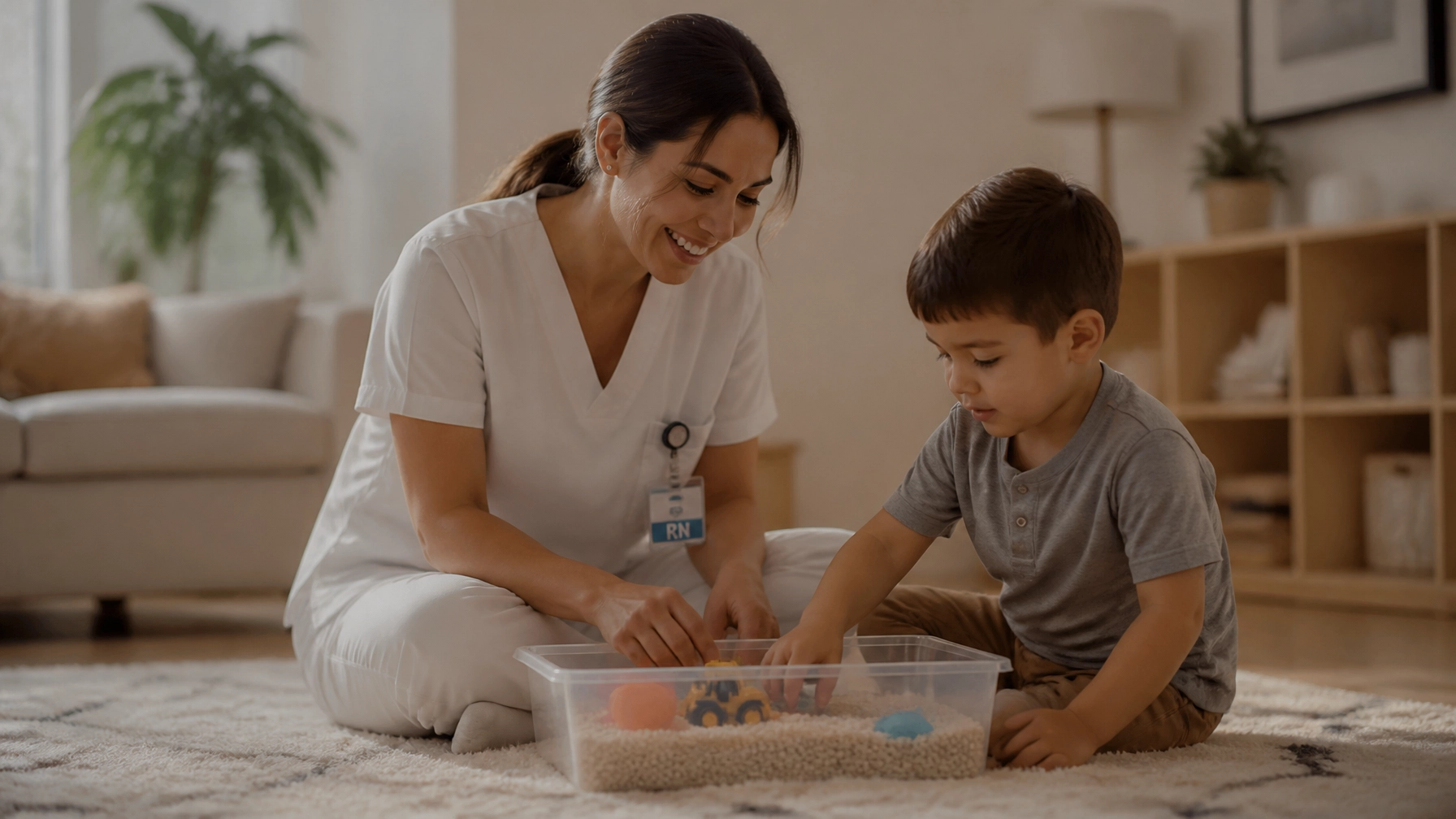

The Georgia Pediatric Program (GAPP) remains a vital resource for families managing the complex needs of medically fragile children. As we navigate the regulatory landscape of 2026, the program continues to provide essential skilled nursing and personal care support services designed to keep children in their homes rather than in institutional settings. Understanding the specific eligibility criteria and procedural requirements is necessary for a successful application and sustained service delivery.
At Onekap Healthcare Solution, LLC, we recognize that the application process can be rigorous. This guide serves as a technical resource for families and guardians, detailing the 2026 standards for eligibility, documentation, and the strategic steps required to secure and maintain GAPP services.
Defining GAPP and the 2026 Framework
GAPP is a specialized Medicaid program administered by the Georgia Department of Community Health (DCH). It is specifically engineered for individuals under the age of 21 who require a nursing home level of care. The program’s primary objective is to facilitate the safe transition of children from hospitals to their homes and to prevent the unnecessary institutionalization of those with chronic, complex medical conditions.
In 2026, the program has been extended with a renewed emphasis on clinical accuracy and administrative transparency. The standards for "medical necessity" have become more clearly defined, requiring precise documentation from primary care physicians and specialists to justify the requested hours of in-home care.
Core Eligibility Criteria
To qualify for GAPP in 2026, an applicant must meet four foundational requirements. Failure to satisfy any of these criteria will result in a denial of services.
1. Age and Residency
The applicant must be under 21 years of age. Additionally, they must be a legal resident of the state of Georgia. New for 2026, the DCH requires enhanced proof of residency documentation, such as updated utility bills or official lease agreements, to be submitted alongside the initial application packet.
2. Medicaid Enrollment
GAPP is a Medicaid-funded program. Therefore, the child must be eligible for Georgia Medicaid. This eligibility can be established through several categories:
- SSI (Supplemental Security Income): For children who meet the federal disability and income standards.
- Family Medicaid: Based on household income and size.
- Katie Beckett (Deeming Waiver): This is a critical pathway for families whose income is too high for traditional Medicaid but whose child requires an institutional level of care.
3. Medical Fragility
"Medical fragility" is a clinical designation. It refers to children with chronic conditions that are characterized by medical complexity and frequent requirements for skilled intervention. This includes technology-dependent children (e.g., those on ventilators or feeding tubes) and those with severe neurological or genetic disorders that necessitate constant monitoring to prevent life-threatening complications.
4. Nursing Home Level of Care (LOC)
The child’s medical needs must be significant enough that, in the absence of home-based nursing, they would require placement in a skilled nursing facility or hospital. This is determined through a comprehensive nursing assessment and a review of physician-ordered services.

Clinical Requirements and Common Qualifying Conditions
While GAPP does not limit eligibility to specific diagnoses, the focus is on the intensity of care required. In 2026, the clinical review team prioritizes cases involving the following medical needs:
- Respiratory Support: Children utilizing ventilators, BiPAP/CPAP, tracheostomies, or those requiring frequent deep suctioning.
- Nutritional Support: Dependency on Gastrostomy tubes (G-tubes), Jejunostomy tubes (J-tubes), or Total Parenteral Nutrition (TPN).
- Neurological Complexity: Severe seizure disorders, intractable epilepsy, or neuromuscular diseases that impact respiratory function and mobility.
- Post-Surgical or NICU Discharge: Infants or children transitioning from intensive care who require wound care, central line management, or specialized monitoring.
We advise families to ensure that all physician documentation explicitly links these conditions to the need for "skilled nursing" rather than general caregiver assistance.
2. The 2026 Application Roadmap: A Step-by-Step Action Plan
Navigating the GAPP application requires a structured approach. We recommend following this formalized sequence to ensure compliance with current DCH standards.
Step 1: Secure Medicaid Status
Before applying for GAPP, verify the child’s Medicaid status through the local Division of Family and Children Services (DFCS) office or the Georgia Gateway portal. If the child is not currently enrolled, the Katie Beckett waiver is often the most appropriate route for medically fragile children in middle-to-high-income households.
Step 2: Assemble the Medical Portfolio
The success of an application depends on the strength of the evidence. We recommend gathering the following documents from the last 12 months:
- Hospital discharge summaries.
- Specialist consultation reports (Neurology, Pulmonology, etc.).
- Physical, Occupational, and Speech therapy evaluations.
- A current, comprehensive medication list.
- A detailed list of all durable medical equipment (DME) in use.
Step 3: Physician Coordination
Your child’s primary care physician must complete specific forms, such as the DMA-6A (Medical Necessity Physician Recommendation). The physician must also sign a Physician Plan of Treatment (PPOT) that clearly outlines the requested hours for skilled nursing and personal care support.

Step 4: Engage a GAPP-Approved Provider
GAPP applications are typically submitted through an approved nursing agency. As a dedicated provider, Onekap Healthcare Solution, LLC facilitates this process by conducting an initial nursing assessment to determine the appropriate level of care and compiling the final Prior Authorization (PA) packet for submission to the DCH.
Step 5: Prior Authorization Review
Once the complete packet is submitted, the Prior Authorization Unit reviews the request. This process generally takes up to 30 calendar days. During this time, the state’s medical reviewers assess whether the clinical documentation justifies the requested hours based on the child's medical necessity.
Avoiding Common Pitfalls in 2026
Applications are frequently delayed or denied due to technical errors. We have identified several recurring issues that families should proactively address:
- Incomplete Documentation: Missing signatures on physician forms or outdated therapy evaluations are primary causes for denial.
- Insufficient "Skilled" Justification: If documentation describes tasks that a layperson could perform without clinical training, the state may deny skilled nursing hours. Documentation must emphasize the clinical judgment and specialized skills required for the child's safety.
- Lapsed Medicaid Eligibility: GAPP services will be suspended if Medicaid eligibility is not renewed annually through DFCS. It is imperative to monitor the "Redetermination" dates in the Georgia Gateway portal.
- Residency Gaps: Failure to provide current, state-approved proof of Georgia residency can lead to administrative rejection under the 2026 updated guidelines.
How Onekap Healthcare Solution, LLC Supports Your Family
At Onekap Healthcare Solution, LLC, we provide high-quality private home healthcare services with a focus on deep compassion and clinical excellence. We act as a strategic partner for families navigating GAPP eligibility.
Our role includes:
- One-on-One Consultations: We meet with families to assess their specific needs and determine the most appropriate staffing model.
- Rapid Staffing: We understand the urgency of home healthcare needs and prioritize matching clients with skilled caregivers quickly.
- Customized Care Plans: We develop highly personalized care plans that adhere to the Physician Plan of Treatment while maximizing the child's comfort and safety at home.
- Administrative Assistance: We help manage the technical requirements of the GAPP application and recertification processes, reducing the administrative burden on families.

Conclusion
The 2026 GAPP program remains a critical pillar of support for Georgia’s medically fragile population. While the eligibility requirements are stringent, a meticulous approach to documentation and a strong partnership with a skilled nursing agency can facilitate a successful outcome.
By adhering to the clinical and administrative standards outlined in this guide, families can ensure their children receive the specialized care they require in the safety and privacy of their own homes.
For professional assistance with GAPP staffing or to initiate a consultation, we invite you to contact us directly.
Contact Information:
- Email: info@onekap.com
- Phone: 770-800-6603
- Website: www.onekap.com